
Ductless Mini-Split Installation in Davenport, FL
Ductless mini-split installation in Davenport, FL from Multitek Air Conditioning & Heating gives you heating and cooling without adding traditional ductwork.
A mini-split can serve one room or several areas with separate indoor units. The right setup depends on the size of each space, where the indoor units go, outdoor-unit capacity, refrigerant lines, drainage, electrical needs, and how you want to control each area.
Where Does a Ductless Mini-Split Make Sense?
A mini-split can be useful when extending traditional ductwork does not make sense or when one area needs its own temperature control.
Common examples include:
- Home additions
- Finished bonus rooms
- Home offices
- Guest spaces
- Rooms that are difficult to condition with the central system
- Properties without existing ductwork
- Areas where separate temperature control is useful
A ductless system uses an outdoor unit connected to one or more indoor units.
Because conditioned air is delivered directly into the room, you do not need a traditional supply and return duct system for that area.
That can make installation a practical option for spaces that would otherwise require major duct changes.

Size the System Before Choosing the Equipment
Mini-splits need to be sized for the space they serve.
A system that is too small may struggle during high cooling demand.
A unit that is too large can reach the thermostat setting too quickly and cycle in a way that may affect comfort and moisture control.
Square footage is only part of the picture.
Sizing can also be affected by:
- Windows and doors
- Insulation
- Ceiling height
- Sun exposure
- Air leakage
- Room use
- Nearby unconditioned spaces
- The number of zones being served
Good planning starts before the equipment goes on the wall.

One Zone or More Than One?
The number of indoor units changes how a mini-split system is planned.
Single-Zone Mini-Split
A single-zone system connects one outdoor unit to one indoor unit.
This can work well when one room or specific area needs heating and cooling.
Multi-Zone Mini-Split
A multi-zone system connects more than one indoor unit to compatible outdoor equipment.
Each indoor unit can serve a separate area.
The number of zones should be based on the layout and heating and cooling needs of the property, not simply on the number of rooms.
More indoor units do not automatically mean better comfort.
The outdoor equipment, indoor units, line-set layout, and capacity all need to work together.
Indoor Unit Placement Changes How the Room Feels
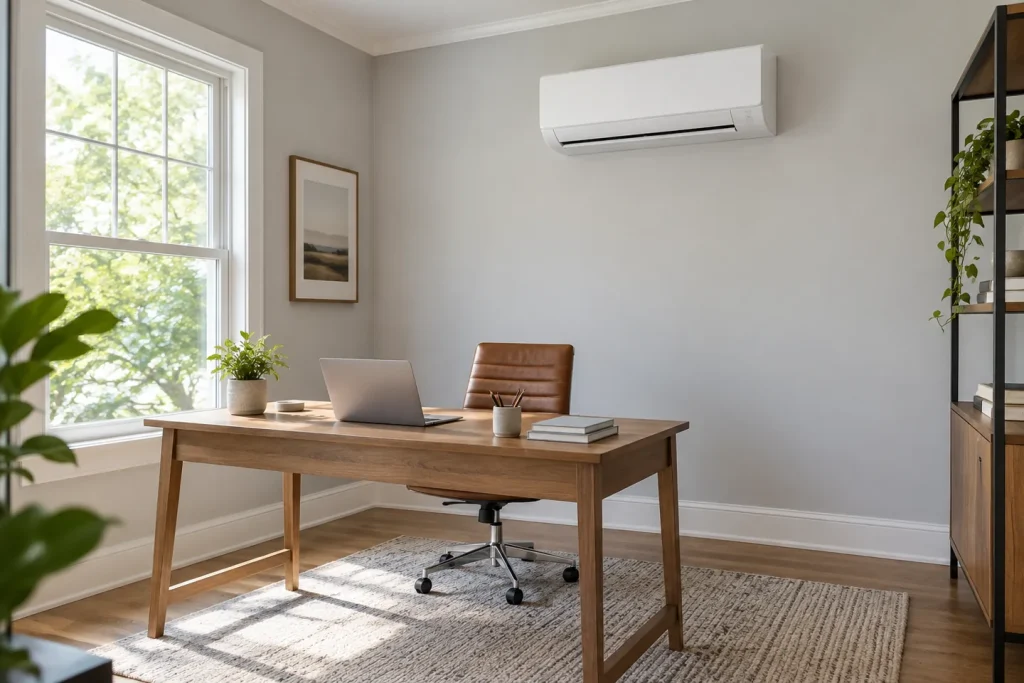
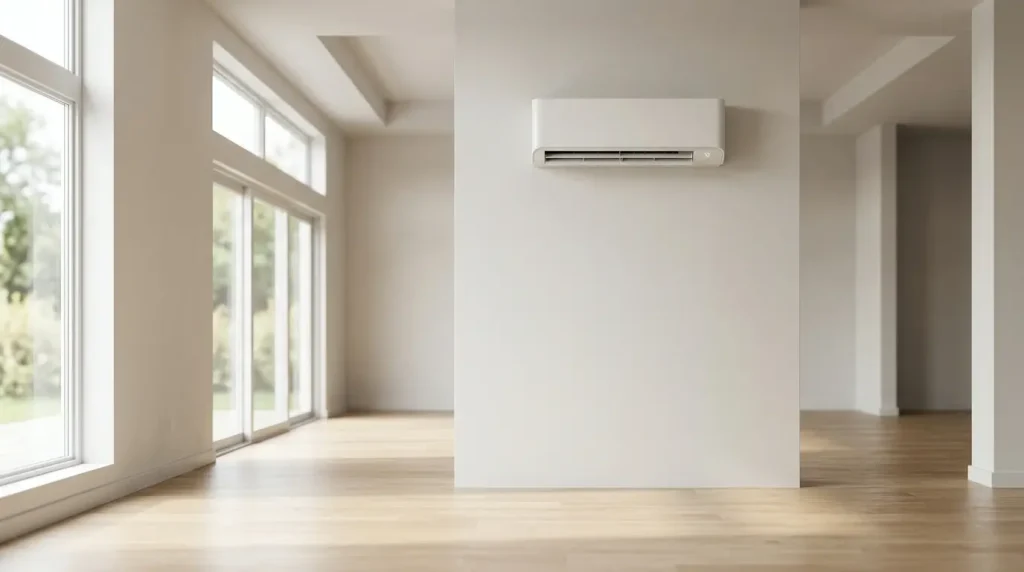
The indoor unit needs space to move air through the area. Placement should consider both comfort and installation access. A wall-mounted unit should not be treated like a picture that can go anywhere there is open wall space. The location may affect: how air moves across the room; how easily the unit can drain condensate; the path for refrigerant lines; access for future service; the distance to the outdoor unit; where the unit is visible in the room. The goal is to find a location that supports the system while still making sense for the space. Other indoor-unit styles may also exist depending on the system selected.
How We Plan a Ductless Installation
1. Choose the Space
Start with the room or areas that need heating and cooling. The layout helps determine whether a single-zone or multi-zone setup makes sense.
2. Match the Capacity and Locations
Equipment size, indoor-unit placement, outdoor-unit location, line routing, drainage, and electrical needs are considered together.
3. Install the System
The indoor and outdoor components are mounted and connected based on the planned setup.
4. Start and Check Operation
The system is started and basic cooling, heating, drainage, controls, and indoor-unit response are checked.

Plan the Outdoor Unit, Line Set, and Drainage Together
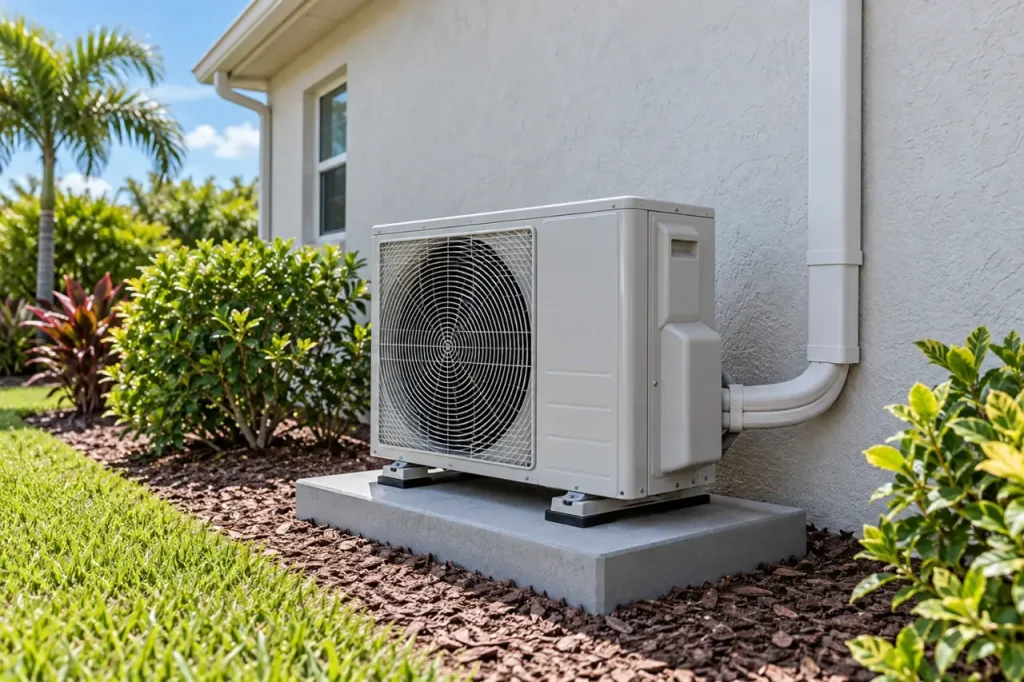
The outdoor unit and indoor unit are connected by refrigerant lines, wiring, and a condensate path.
Those connections need a planned route.
The outdoor unit needs a suitable location with room for airflow and service access.
The installation may also need to account for:
- Outdoor-unit support and anchoring
- Electrical disconnect location
- Refrigerant line routing
- Wall penetrations
- Sealing around line-set openings
- Condensate drainage
- Protection of exposed lines
- Access to the equipment
This is especially important in Florida because mini-splits handle cooling for long periods during warm weather.
Cooling also removes moisture from indoor air. That moisture becomes condensate and needs a proper path away from the indoor unit.
What Ductless Mini-Split Installation Includes
The exact work depends on the system and property.
Installation may include:
- Reviewing the space being conditioned
- Determining the number of zones
- Checking equipment sizing
- Selecting indoor-unit locations
- Planning the outdoor-unit location
- Mounting the indoor unit
- Setting the outdoor equipment
- Routing refrigerant lines
- Making required electrical connections
- Installing the condensate drain
- Sealing wall penetrations
- Connecting compatible controls
- Starting the system
- Checking heating and cooling operation
- Reviewing basic controls
The equipment should be treated as one connected system.
Indoor and outdoor components need to be compatible with each other and sized for the areas they serve.
Mini-Split Installation for Davenport Conditions
Multitek Air Conditioning & Heating is based at:
152 Sunny Day Way
Davenport, FL 33897
Central Florida has a long warm season. That makes cooling performance and moisture removal important when planning a mini-split system.
For a Davenport installation, it is useful to think about more than temperature.
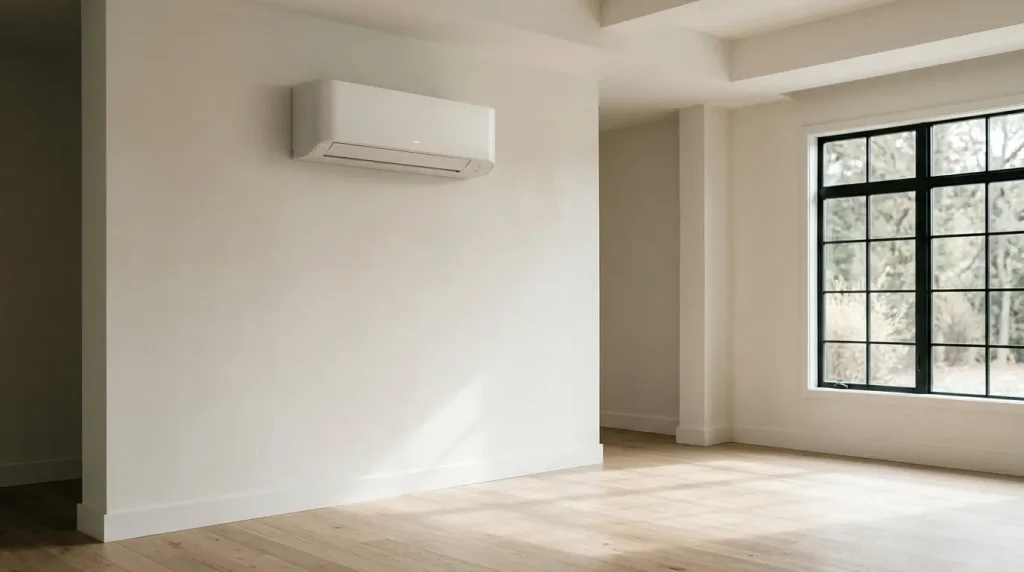
Indoor-unit placement, condensate drainage, outdoor-unit location, line-set routing, and system sizing all affect the finished setup.
The outdoor equipment also needs a suitable location, proper clearances, secure support, and the electrical and refrigerant connections required for the selected system.
Permit and inspection requirements depend on the property, scope of work, and authority that has jurisdiction over the installation address.
Ductless Mini-Split Installation FAQs
What is a ductless mini-split?
A ductless mini-split is a heating and cooling system that connects an outdoor unit to one or more indoor units without using traditional central-air ductwork.
Can a mini-split provide both heating and cooling?
Many mini-split heat-pump systems provide both. Cooling-only ductless equipment also exists, so the system should be selected based on the needs of the space.
How many mini-split units do I need?
That depends on the rooms or zones being conditioned, their heating and cooling needs, and the capacity of the equipment. One indoor unit may be enough for one area, while other properties may need multiple zones.
How do I know what size mini-split I need?
The system should be sized based on the heating and cooling needs of the space. Square footage alone is not enough to select the right equipment.
Where can an indoor mini-split unit be installed?
Placement depends on the room layout, airflow path, mounting surface, condensate routing, refrigerant-line path, equipment clearances, and service access.
Does a mini-split need a drain?
When the system cools and removes moisture from indoor air, condensate must be drained from the indoor unit. The drain route is part of installation planning.
Request Ductless Mini-Split Installation in Davenport
If you have a room, addition, or other area that needs its own heating and cooling setup, start by looking at the space and how you want to use it.
Multitek Air Conditioning & Heating can help plan the number of zones, equipment size, indoor-unit placement, outdoor-unit location, and setup for your Davenport property.
152 Sunny Day Way Davenport, FL 33897