
MULTITEK AIR CONDITIONING & HEATING
Ductwork Installation in Davenport, FL
Ductwork installation in Davenport, FL from Multitek Air Conditioning & Heating starts with planning how conditioned air needs to move through the home.
A duct system connects the HVAC equipment to the rooms you want to heat and cool. Good installation depends on duct size, layout, supply and return airflow, insulation, sealing, and how the system fits the home.
New Ductwork Starts With the Air Path
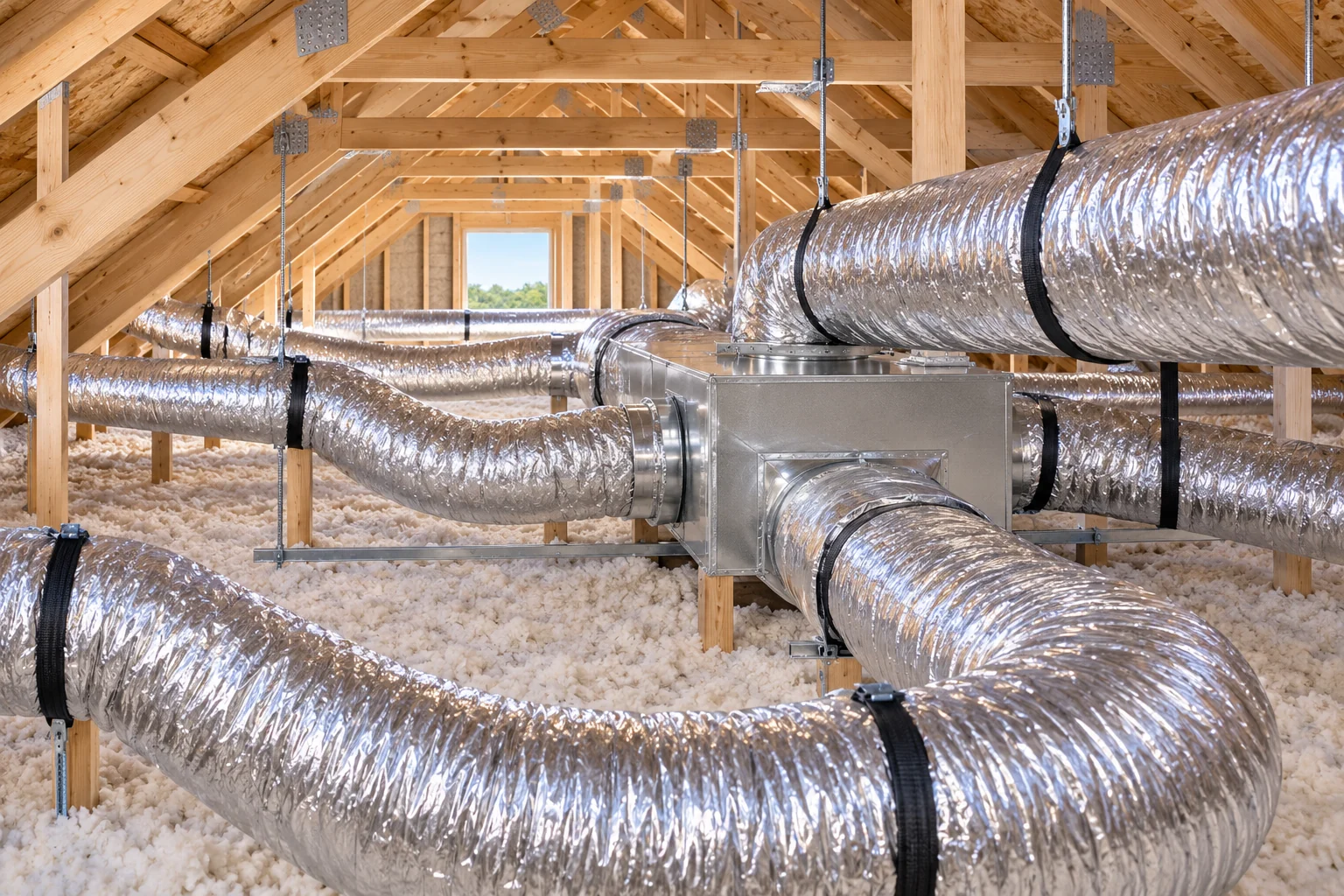
Ductwork is not just a group of tubes in the attic.
Each supply duct has to deliver conditioned air to the right area. Return air also needs a clear path back to the HVAC equipment.
If the layout does not match the home, some rooms may receive too much air while others receive too little.
Planning can include:
- Supply register locations
- Return-air locations
- Duct size
- Available attic or ceiling space
- Air handler location
- Length of duct runs
- Branch connections
- Airflow needs for different rooms
The goal is to create a clear path from the HVAC equipment to the living space and back again.
When New Ductwork Makes Sense
A full duct installation can be useful in several situations.
You may be planning new ductwork when:
- A home does not have a usable central duct system
- Existing ductwork is being fully replaced
- A renovation changes the layout of the home
- An addition needs to be connected to a central HVAC system
- The current duct layout no longer matches the equipment or floor plan
- Existing ducts are badly damaged or difficult to reuse
- Supply and return locations need to be redesigned
A complete duct installation is different from cleaning existing ducts or making a small localized repair.
If the existing system can remain in place, the scope may be different. If a new distribution system is needed, the layout should be planned before installation begins.
Supply and Return Airflow Need to Work Together
Supply ducts move conditioned air into the home.
Return ducts bring air back to the HVAC equipment so it can be heated or cooled again.
Both sides matter.
A duct system can have problems even when the supply side looks large enough if return airflow is restricted or poorly located.
During planning, it can be useful to consider:
Supply Air
Each room needs a path for conditioned air to enter.
Return Air
Air also needs a path back to the system without being heavily restricted.
Duct Size
Different sections of the system may need different duct sizes based on the airflow they carry.
Duct Routing
Long runs, sharp turns, crushed flexible duct, and difficult routing can affect airflow.
Register Placement
Supply and return locations can influence how air moves through a room.
A well-planned duct layout looks at the system as a whole rather than treating each branch as a separate piece.
Ductwork in Florida Attics
Many Florida homes have HVAC ducts running through attic spaces.
That creates a specific challenge.
During warm weather, attic air can be much hotter than the conditioned air moving inside a supply duct. Moisture and condensation are also important concerns when cold duct surfaces are exposed to warm, humid air.
For ductwork located outside the conditioned space, sealing and insulation matter.
Properly insulated ducts help limit unwanted heat gain. A continuous vapor barrier around insulated metal ductwork can also help reduce condensation on cold surfaces.
Connections, joints, boots, and transitions also need attention because air can escape at poorly sealed points.
For a Davenport home, duct installation should account for where the ducts will run, not just how they connect to the air handler.
What Ductwork Installation Can Include
The exact scope depends on the property and the HVAC layout.
A ductwork installation may include:
- Reviewing the existing HVAC distribution system
- Planning supply and return paths
- Sizing duct sections
- Removing old ductwork when replacement is part of the project
- Installing trunk lines and branch ducts
- Installing supply and return connections
- Connecting ducts to registers and grilles
- Connecting the duct system to the air handler
- Sealing joints and connections
- Insulating ductwork where required
- Supporting and routing flexible or rigid duct sections
- Checking airflow after installation
The finished duct system should work with the HVAC equipment and the layout of the home.
How the Installation Moves From Plan to Airflow
1. Review the Home
The existing HVAC setup, floor plan, air handler location, and available duct routes are reviewed.
2. Plan the Distribution
Supply runs, return paths, duct sizes, connections, and register locations are considered before the main installation begins.
3. Install and Seal the Ductwork
The required duct sections, branches, boots, and connections are installed and sealed based on the planned layout.
4. Check Airflow and Operation
After installation, airflow and system operation can be checked to make sure conditioned air is moving through the new distribution system as intended.
New Construction, Remodels, and Full Duct Replacement
Duct installation can look different depending on the property.
New Duct System
A new duct system gives the installer the chance to plan the supply and return layout around the current floor plan and HVAC equipment.
Remodel or Addition
Moving walls, changing room use, or adding conditioned space can change where air needs to go.
The duct plan should reflect the new layout rather than simply extending a branch without considering airflow.
Full Duct Replacement
When existing ductwork is being removed and replaced, the old layout can be reviewed before reproducing it.
A replacement project is an opportunity to check whether duct sizes, routes, returns, and register locations still make sense for the home.
Ductwork Installation in Davenport
Multitek Air Conditioning & Heating is based at:
**152 Sunny Day Way
Davenport, FL 33897**
Davenport homes rely heavily on air conditioning during warm weather. That means the duct system may carry cooled air for long periods during the year.
When ducts pass through an unconditioned attic, insulation, sealing, and moisture control become especially important.
Florida's current energy code includes requirements for duct sealing, insulation, and certain duct-leakage testing conditions. The permit and inspection path can vary based on the property, project scope, and local jurisdiction.
For projects under Polk County jurisdiction, current HVAC inspection guidance specifically calls for inspection of duct connections and any duct repairs or modifications associated with HVAC change-out work.
The project scope should be confirmed for the specific installation address before work begins.
Before Approving a New Duct Layout
A few questions can make the plan easier to understand:
Where will the main supply duct run?
How will each room receive conditioned air?
Where will return air enter the system?
Are the existing registers staying or moving?
Will the ducts run through conditioned space or an attic?
What type of duct insulation will be used where needed?
How will joints and connections be sealed?
Does the existing HVAC equipment match the planned airflow?
Clear answers help define what is actually being installed.
Ductwork Installation FAQs
Duct installation involves building or replacing a duct distribution system. Duct repair usually focuses on correcting a specific damaged, disconnected, or leaking section of existing ductwork.
Duct insulation requirements depend on where the ducts are located and the applicable code. Ducts in unconditioned spaces such as attics commonly need insulation to limit heat transfer and condensation risk.
Sometimes parts of an existing duct system can remain, but that depends on condition, size, layout, airflow, and compatibility with the planned system.
Return ducts provide a path for air to move back to the HVAC equipment. Restricted return airflow can affect how air moves through the entire system.
A new duct layout may help when the cause is related to duct sizing, routing, supply distribution, or return airflow. The cause should be identified before deciding that new ductwork is the right solution.
Testing requirements depend on the project and code-compliance path. Florida’s energy code includes duct-leakage testing provisions for certain projects, with specific exceptions.
Permit requirements depend on the project scope and the jurisdiction for the property. The applicable mechanical permit and inspection requirements should be confirmed for the specific address.
Duct cleaning and new duct installation are different services. A new installation focuses on building or replacing the air-distribution system.
Request Ductwork Installation in Davenport
If your home needs a new duct system, a full duct replacement, or a redesigned distribution layout, start with the way air needs to move through the property.
Multitek Air Conditioning & Heating can review the duct installation needs and help define the supply, return, sealing, insulation, and airflow setup for your Davenport home.